Everyone knows cramming is bad. Everyone also crams, because sometimes the exam is Friday and you started Tuesday, and advice that begins "you should have started six weeks ago" is not useful on a Tuesday.
So let's be practical about it: what actually happens when you cram, and what the best available move is when you're already short on time.
What the research actually says
The spacing effect is one of the most reliably reproduced findings in learning research, going back to Ebbinghaus in the 1880s. The result is consistent: take a fixed amount of study time and spread it across several sessions, and you retain substantially more than packing it into one block — even though the massed session feels more productive.
That feeling is the trap. Cramming produces high familiarity, and familiarity is easy to mistake for knowledge. You recognise every slide, so you conclude you know the material; recognition and recall are different abilities, and only one of them is on the exam.
Cramming reliably produces a sharp peak that decays fast. It is why material crammed for a midterm is usually gone by the cumulative final.
Why re-reading feels so much better than it works
There's a well-documented gap between how well a study technique works and how well it feels like it's working. Re-reading scores near the top on the second measure and near the bottom on the first.
The reason is fluency. The second time through a chapter it reads smoothly, and your brain interprets that smoothness as understanding. Testing yourself feels worse precisely because it's harder — and the difficulty is where the learning happens. If your revision feels comfortable, it probably isn't working.
When cramming is genuinely the right call
If the exam is in three days and you have four weeks of material you've never reviewed, spaced repetition cannot help you. Spacing needs time it doesn't have. In that situation cramming isn't a mistake — it's the only tool that fits.
The honest framing: cramming is a recovery tactic. Use it deliberately, know it's borrowing against retention after the exam, and don't confuse it with a study method.
The last week, day by day
Days 7–3: keep the schedule, add an exam date
Don't abandon your normal reviews to start re-reading everything — scheduled reviews are the highest-value study you have. What you should do is tell the app when the exam is.
Setting an exam date on a deck changes how it plans: instead of spacing purely by memory strength, it keeps intervals inside your remaining window so the deck is actually ready by that date, rather than scheduling a key card for three weeks after you sit the paper.
Days 3–1: target the weak material
Now narrow. Finish your due reviews, then drill specifically what you keep getting wrong — flag cards during a session and come back to only those.
This is where extra practice belongs, and it's why cram mode is deliberately separate from scheduling. Cramming never touches your due dates, memory strength, or mastery state, so unlimited drilling can't corrupt the schedule underneath it.
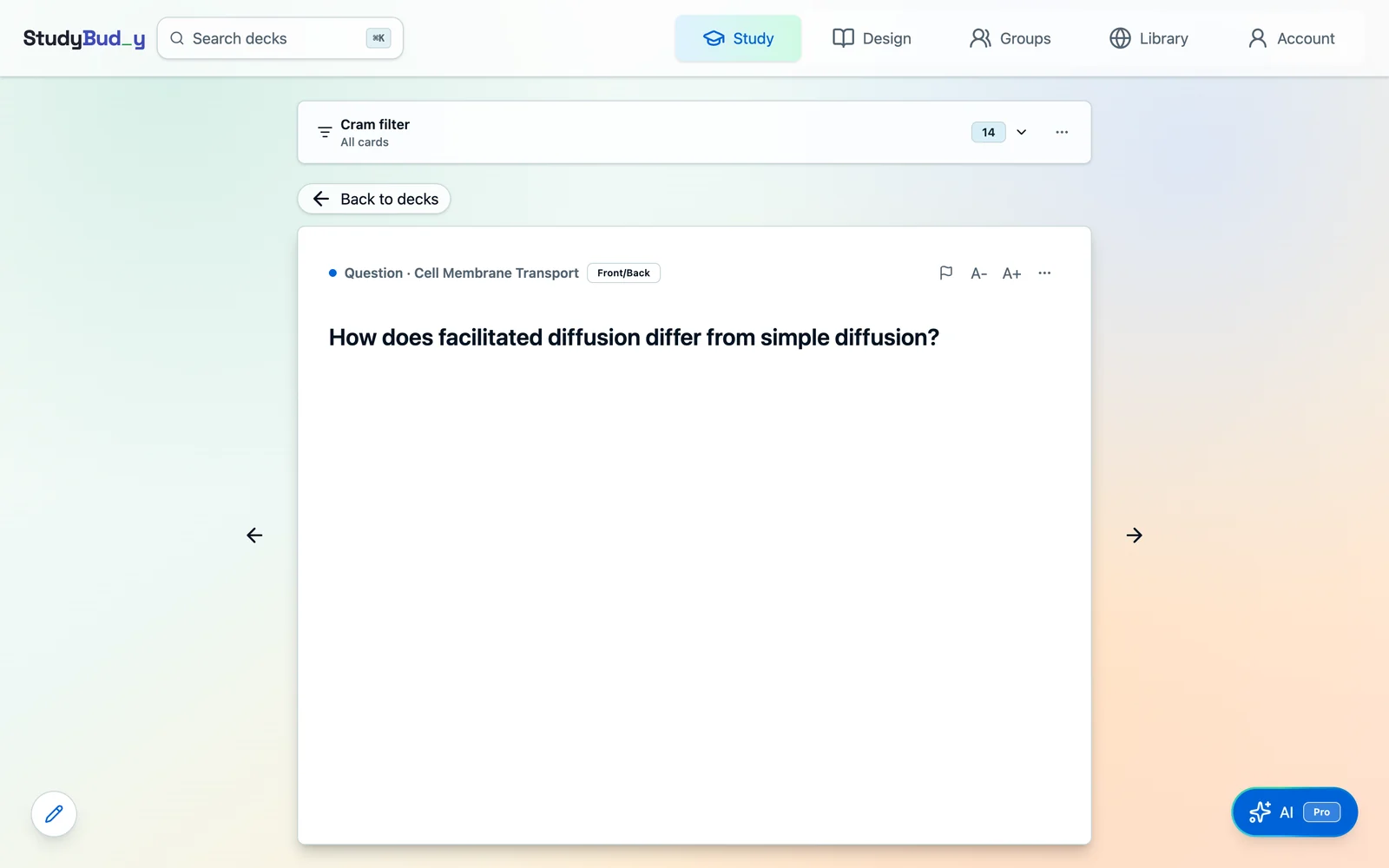
You can narrow a cram session by card status, type, tag, or flagged-only, which is what makes "drill just the twelve things I keep failing" possible.
The last day: retrieve, don't re-read
Re-reading notes is the least efficient thing you can do with your final hours and by far the most tempting, because it's comfortable and feels like progress. Test yourself instead — cover the answer, say it out loud, write it from memory.
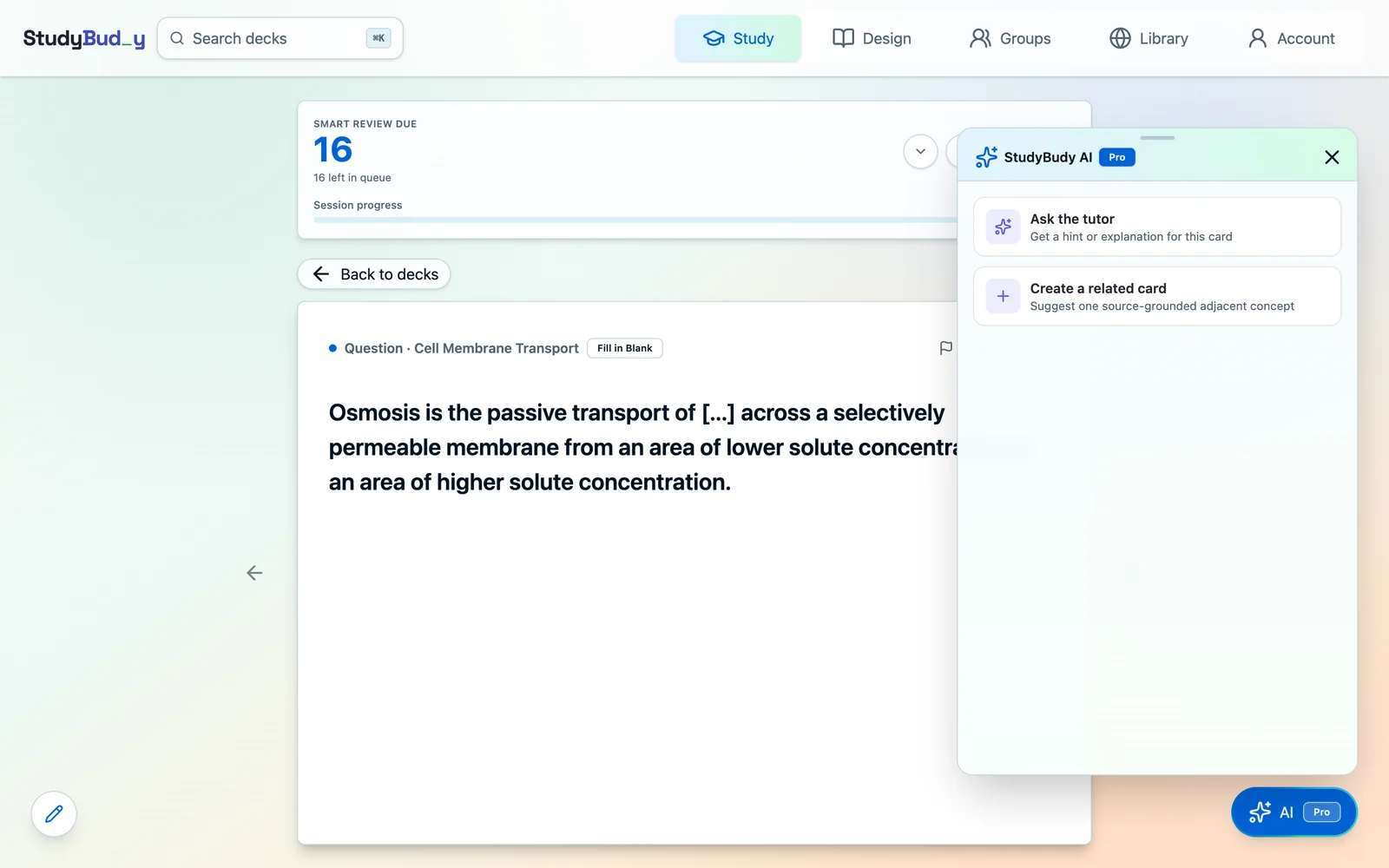
If a concept collapses under testing, that's the signal to go back to the source material for that one thing. And if you're stuck on a specific card, asking for an explanation is faster than re-reading a chapter.
The night before: sleep
Consolidation happens during sleep. Trading your last four hours of sleep for four more hours of revision is close to always a net loss — you'll recall less and think worse under time pressure. This is the single most reliable exam-week advice there is, and the most ignored.
Prioritise by weight, not by anxiety
Under time pressure people study what makes them most anxious, which is usually one narrow topic they've decided they're bad at. That's rarely the highest-value use of a final day.
Rank what's left by marks available × how far you are from knowing it. A topic worth 20% that you half-know beats a topic worth 3% that you don't know at all. This is unglamorous and it works.
After the exam, don't stop
Here's where crammers lose the most and notice the least. Two weeks after the exam, crammed material is largely gone — which is fine until the cumulative final, the licensing exam, or the class that builds on this one.
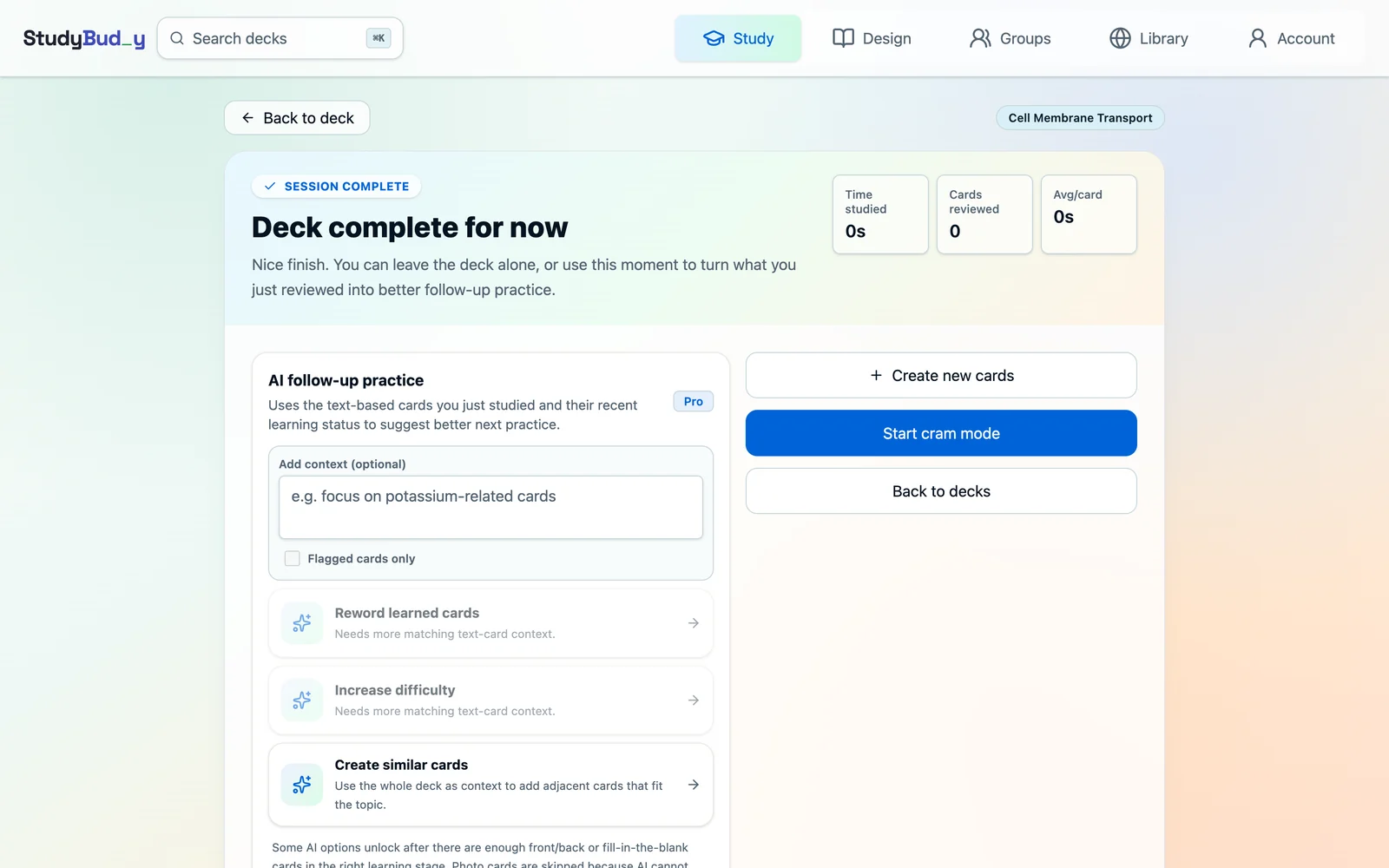
If the material matters beyond Friday, keep the deck alive. Finish the exam, then let scheduling resume — a few minutes a day is enough to hold what cramming got you, and it's the only version of this that compounds.
The summary
| Situation | Do this |
|---|---|
| Exam in 4+ weeks | Scheduled reviews only. Don't cram at all. |
| Exam in 1–2 weeks | Set an exam date, keep reviews, drill flagged cards. |
| Exam in 2–3 days | Cram deliberately, prioritise by weight, sleep properly. |
| Exam tomorrow | Active recall on high-yield material. Then sleep. |
| Exam finished | Resume normal reviews if the material matters later. |
Keep reading
The way to not need this post next term is a sustainable daily review habit. For why spacing works at all, see our FSRS explainer — and if your cards keep failing under pressure, they may be badly written.